
🏠 Weatherboard Care Guide

How to Wash a Weatherboard House in Auckland Without Damaging It

The complete guide to safely cleaning timber, Linea, and cedar weatherboard homes — which methods protect your cladding, which ones destroy it, and why most Auckland homeowners get it wrong.

📅 July 2026 ⏱ 12 min read 🏠 Expert Guide
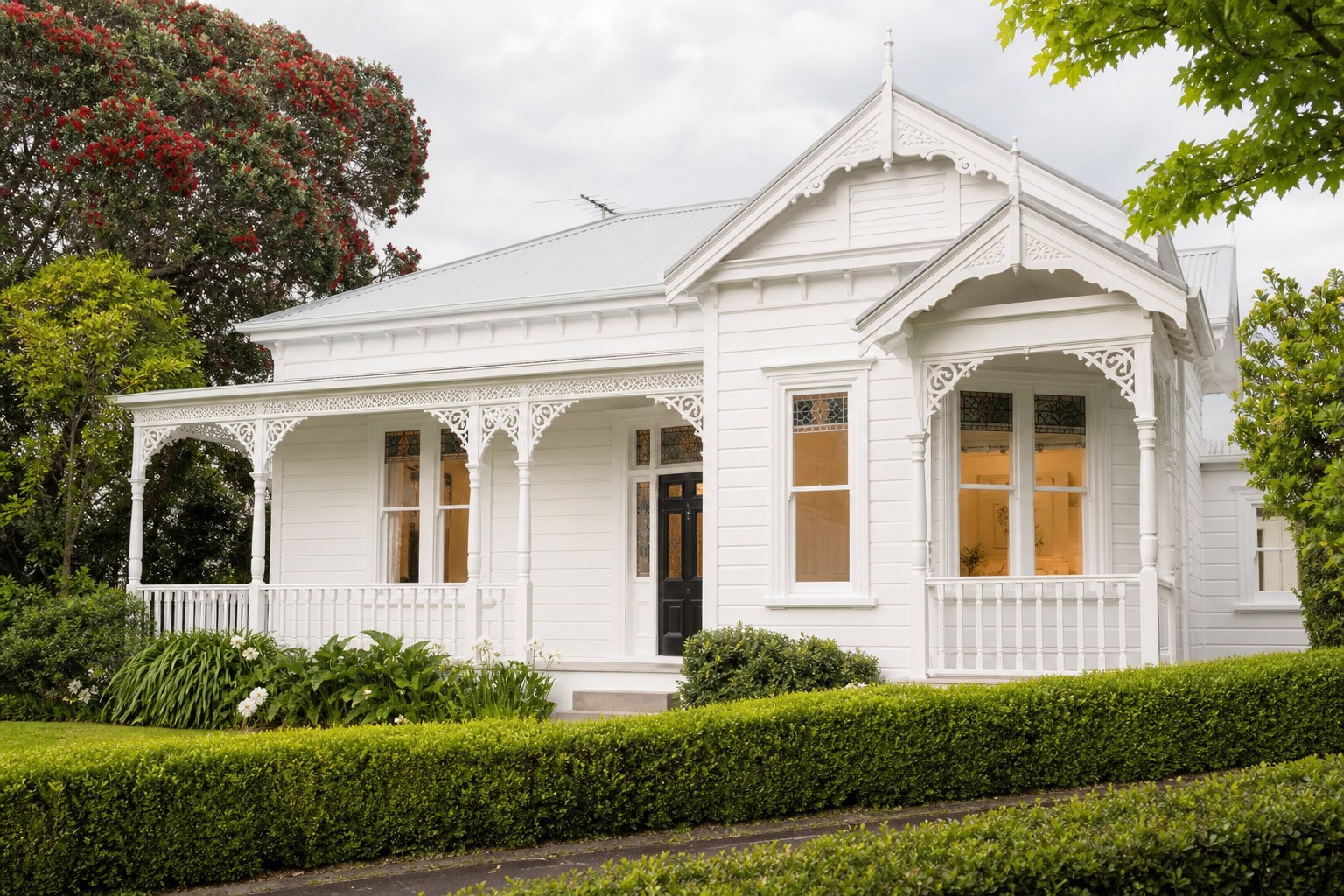
Professional soft washing of weatherboard house in Auckland — Essential Water Blasting

Why Auckland Weatherboard Homes Need Special Washing Care

Weatherboard is the most common exterior cladding on Auckland homes. From 1880s Ponsonby villas to 2020s builds in Hobsonville, weatherboard dominates the Auckland streetscape — and every type of it needs a different approach when it comes to cleaning.

The problem is that weatherboard is not a single material. Auckland homes use timber (native and pine), fibre-cement (Linea, HardiePlank), cedar, and even PVC weatherboard — each with different tolerances for pressure, chemicals, and moisture. Use the wrong cleaning method and you’ll strip paint, gouge timber, force water behind the cladding, or void your product warranty.

Essential Water Blasting has washed over 1,000 Auckland homes, and weatherboard jobs make up the vast majority. We’ve seen the full spectrum — from pristine Linea on brand-new builds to 100-year-old kauri weatherboards with six layers of lead paint. The method that works safely on every single one is soft washing: low pressure below 500 PSI combined with a biodegradable treatment solution.

This guide covers everything Auckland homeowners need to know: the different weatherboard types, what causes them to get dirty, why high-pressure water blasting damages them, how professional soft washing works, and exactly how much it costs.

📋 Know Your Cladding

6 Common Weatherboard Types on Auckland Homes

Not all weatherboard is the same. The type on your house determines how it should be washed — and what will damage it.

🪵

Timber Bevel-Back (Pine)

The most common weatherboard in Auckland. Finger-jointed, treated, primed radiata pine in a bevel-back profile. Found on homes built from the 1950s onwards. Painted finish. Susceptible to mould, algae, and lichen growth on south-facing walls. Must be soft washed — high pressure strips paint and forces water into the lap joints.

🏛️

Timber Rusticated

Traditional profile found on Auckland villas, bungalows, and character homes built before 1940. The rebated joint is thinner and more prone to splitting under pressure. Often native timber (rimu, kauri, matai). Extremely delicate — requires the lowest pressure settings and a wide fan nozzle.

📐

Linea (James Hardie)

Fibre-cement weatherboard that dominates new Auckland builds. 4.5mm thick, factory-primed, 25-year warranty. Highly impact-resistant and dimensionally stable. Safe for soft washing — but high-pressure water blasting can damage the factory coating, chip edges, and void the warranty.

🌲

Cedar

Naturally durable, often used on character builds and architecturally designed homes across Auckland suburbs like Titirangi, Piha, and the North Shore bays. Usually oiled or stained rather than painted. Very soft timber — high pressure gouges the grain instantly. Requires the gentlest soft wash approach with cedar-safe solutions.

🔩

Palliside (PVC)

Extruded PVC weatherboard used on some Auckland renovations and new builds. Lightweight, low maintenance, does not rot. Easy to soft wash — it handles cleaning well, but high pressure can crack cold PVC in winter and force water behind the clips and into the wall cavity.

🧱

Fibre-Cement Panel (Titan, BGC)

Sheet-form fibre-cement cladding used on Auckland homes built from the 1980s onwards. Larger panels with fewer joints than weatherboard profiles. Durable — tolerates soft washing well. High pressure can damage paint coatings, joint sealants, and exposed edges where fibre is visible.

What Actually Gets on Your Weatherboard (and Why)

Auckland’s subtropical climate drives biological growth on every weatherboard surface. The specific combination of growth depends on your location, orientation, and how much shade the cladding receives.

Mould (Black/Grey) — The most common contaminant. Fungal growth that appears as dark patches, especially on south-facing and shaded walls. Mould roots (hyphae) penetrate into paint and timber, causing permanent staining if left for more than 12 months. Produces airborne spores that enter homes through windows and vents.

Green Algae — Slimy green film that thrives on damp surfaces. Particularly common on homes near bush, under trees, or close to the coast. Algae doesn’t root as deeply as mould but creates slip hazards on paths and makes the house look neglected from the street.

Lichen — A combination of fungus and algae that forms crusty, circular patches. Lichen is extremely stubborn once established — it grips into timber grain and painted surfaces. Particularly common on older Auckland villas with textured surfaces. Requires a dwell treatment to break the bond before rinsing.

Salt Residue — Auckland coastal homes from Devonport to Beachlands get a constant mist of salt air. Salt deposits corrode metal fixings, break down paint adhesion, and create a rough surface that attracts mould and algae. Regular washing removes salt before it causes long-term damage.

Dirt and Pollution — Road dust, exhaust residue, and windblown grime build up on weatherboard over 6 to 12 months, creating a dingy appearance that makes the house look older than it is. High-traffic roads and proximity to motorways accelerate this.

⚠️ Critical Difference

Pressure Washing vs Soft Washing Weatherboard

This is where most Auckland homeowners (and some operators) get it wrong. High-pressure water blasting at 2,000 to 4,000 PSI can clean concrete driveways and brick walls effectively — but it causes serious, often irreversible damage to weatherboard cladding.

Factor Pressure Washing (1,500–4,000 PSI) Soft Washing (<500 PSI)
Water pressure 1,500 to 4,000+ PSI Below 500 PSI (garden hose level)
Cleaning method Force removes surface dirt Treatment solution kills growth at root
Paint damage risk High — strips and lifts paint None — safe for all painted surfaces
Water behind cladding High risk — forced into lap joints Minimal risk — low-pressure rinse
Timber damage Gouges, splinters soft grain No mechanical damage
Results duration 6 to 12 weeks (growth returns faster) 12 to 18 months (root system killed)
Safe for weatherboard? ❌ No ✅ Yes — all types

⚠️ Common Pressure Washing Damage on Auckland Weatherboard

  • Paint stripping — high-pressure jets lift and flake paint, especially on older homes with multiple paint layers
  • Timber gouging — soft grain in pine and cedar gets carved out, leaving furrows that trap dirt and moisture
  • Water ingress — pressure forces water through lap joints, behind flashings, and into wall cavities — leading to hidden rot and framing damage
  • Surface roughening — even if visible damage is minimal, high pressure opens up the timber surface, making mould regrow faster than before
  • Warranty void — James Hardie and other manufacturers explicitly recommend against high-pressure cleaning of fibre-cement products
🔧 Our Process

How Essential Water Blasting Soft Washes Weatherboard

A proven 5-step process used on every weatherboard home across Auckland — designed to remove all contamination without damaging cladding, paint, or garden beds.

Property Assessment

We walk the entire exterior before touching anything. We identify the cladding type (timber, Linea, cedar, plaster), assess the paint condition, note any areas of concern (peeling paint, damaged boards, delicate plantings), and check all windows are closed. This determines the pressure, nozzle, and solution strength for each wall.

Garden Pre-Wet

All garden beds, plants, and grass within the treatment zone are thoroughly pre-wetted. This dilutes any runoff before it reaches plant roots. Essential Water Blasting uses biodegradable solutions that are plant-safe when diluted — but pre-wetting ensures an extra layer of protection. Any delicate or prize plants are covered.

Treatment Application

A biodegradable cleaning solution is applied from the bottom up using a low-pressure soft wash system. Bottom-up application prevents streaking from solution running down dry cladding. The solution is left to dwell for 10 to 15 minutes — this is when the real cleaning happens. It kills mould, algae, and lichen at the root level.

Low-Pressure Rinse

After the dwell period, we rinse from the top down using pressure below 500 PSI — roughly the same as a garden hose with a spray nozzle. Top-down rinsing follows the natural water flow direction, avoiding any chance of forcing water behind lap joints. Every surface gets thorough rinsing to remove all solution residue.

Final Inspection & Post-Rinse

We walk the full exterior again, checking every wall, eave, soffit, and window frame for missed areas or residual growth. Stubborn spots get a second targeted treatment. All gardens receive a post-rinse with clean water. We photograph the results and walk through them with you before leaving.

🛡️ Keep It Clean

How to Keep Your Weatherboard Clean Between Washes

🌿

Trim Vegetation Back

Keep trees, shrubs, and climbing plants trimmed at least 300mm from the cladding. Vegetation traps moisture against the surface and blocks airflow — the two conditions mould needs to grow. Pay extra attention to the south side.

💨

Improve Airflow

Clear anything stacked against exterior walls — firewood, storage, building materials. Blocked airflow keeps weatherboard damp after rain. If one wall constantly stays wet, consider whether downpipe or gutter overflow is directing water onto the cladding.

🪣

Clean Gutters Regularly

Overflowing gutters send water cascading down weatherboard walls, creating streaks and accelerating mould growth. A gutter clean twice a year prevents this. Essential Water Blasting bundles gutter cleans with house washes at a discount.

🖌️

Maintain Paint Condition

Paint is your weatherboard’s primary barrier against moisture. Flaking, peeling, or cracked paint lets water into the timber, causing rot and accelerating biological growth. Touch up damaged areas promptly. A well-maintained paint job reduces the frequency of cleaning needed.

📅

Annual Soft Wash

Most Auckland weatherboard homes benefit from a professional soft wash once a year. Coastal homes, bush-adjacent properties, and heavily shaded south-facing elevations may need washing every 6 to 8 months. Regular cleaning prevents permanent staining and extends the life of your paint.

🕷️

Spider Treatment

Spider webs and droppings are a major aesthetic issue on Auckland weatherboard, especially white-painted homes. Essential Water Blasting offers a spider treatment that creates a barrier preventing spiders from returning for months. Add it to your house wash from $80+gst.

💰 Transparent Pricing

How Much Does Weatherboard House Washing Cost in Auckland?

Essential Water Blasting uses fixed-rate pricing based on your home’s size in square metres and whether it’s single or double level. You know the exact cost before the job starts — no surprises, no per-hour billing.

Single Level

Size (sqm) House Wash Gutter Clean Roof Treatment Spider
Up to 80$199+gst$99+gst$149+gst$80+gst
Up to 150$299+gst$149+gst$199+gst$90+gst
Up to 250$349+gst$179+gst$249+gst$100+gst
Up to 350$399+gst$199+gst$299+gst$120+gst
351+ sqmCustom quote required

Double Level

Size (sqm) House Wash Gutter Clean Roof Treatment Spider
Up to 120$349+gst$149+gst$249+gst$130+gst
Up to 200$399+gst$199+gst$299+gst$140+gst
Up to 300$429+gst$229+gst$299+gst$150+gst
Up to 400$449+gst$249+gst$299+gst$160+gst
401+ sqmCustom quote required

💡 Bundle and Save

Book multiple services on the same visit and save. Most Auckland homeowners combine their house wash with a gutter clean, roof treatment, or spider treatment. View full pricing →

For comparison: a full exterior repaint on a weatherboard house costs $8,000 to $25,000+ depending on size and condition. Regular soft washing protects the paint, prevents timber degradation, and extends the years between repaints — making it one of the smartest maintenance investments for any Auckland weatherboard home.

View all pricing → or call 027 722 4550 for a free quote.

Google Reviews
5.0
★★★★★

Based on 46 verified Google reviews from Auckland homeowners.

⭐ Trusted by Auckland Homeowners

40+ Five-Star Reviews — Zero Complaints

Essential Water Blasting maintains a perfect 5.0 Google rating across 46 reviews. Auckland homeowners consistently praise the quality of work on their weatherboard homes, the care taken with gardens, and the difference a professional soft wash makes. Every review has been personally responded to.

❓ Common Questions

Frequently Asked Questions

Can I pressure wash my weatherboard house?

No — not safely. High-pressure water blasting at 1,500 to 4,000 PSI strips paint, gouges timber, forces water behind cladding through lap joints, and roughens the surface so mould grows back faster. Soft washing below 500 PSI with a cleaning solution is the only method recommended by cladding manufacturers and professional exterior cleaners for all weatherboard types.

What is the difference between soft washing and pressure washing?

Soft washing uses low-pressure water (below 500 PSI — equivalent to a garden hose) combined with a biodegradable cleaning solution that kills mould, algae, and lichen at the root. Pressure washing relies on high-pressure water force (1,500 to 4,000+ PSI) to blast contaminants off the surface. Soft washing is safer for weatherboard and produces results that last 12 to 18 months versus 6 to 12 weeks for pressure washing.

How often should I get my weatherboard house washed?

Most Auckland weatherboard homes should be soft washed at least once a year. Properties near the coast, under heavy tree cover, on south-facing slopes, or in areas with poor airflow may benefit from washing every 6 to 8 months. Regular washing prevents permanent staining, protects paint condition, and extends the time between repaints by years.

Will soft washing damage my paint?

No. Soft washing uses pressure below 500 PSI, which is safe for all painted surfaces. The biodegradable cleaning solution is formulated to clean the surface without breaking down paint adhesion. If paint is already flaking or peeling, that indicates underlying moisture or adhesion issues — soft washing won’t make these worse, but we’ll flag them for you during the assessment.

Is soft washing safe for Linea and fibre-cement weatherboard?

Yes. James Hardie (Linea manufacturer) recommends low-pressure cleaning for their products. Their warranty documentation states that high-pressure cleaning can damage the factory coating and is not covered. Essential Water Blasting follows manufacturer guidelines on every job — soft wash only, below 500 PSI.

How much does it cost to wash a weatherboard house in Auckland?

Essential Water Blasting charges by the square metre with fixed-rate pricing. Single level homes start from $199+gst (up to 80 sqm) and range up to $399+gst (up to 350 sqm). Double level homes start from $349+gst (up to 120 sqm) and range up to $449+gst (up to 400 sqm). Larger homes receive a custom quote. Bundle with gutter cleaning, roof treatment, or spider treatment on the same visit and save.

Will the cleaning solution harm my garden?

No. Essential Water Blasting uses biodegradable solutions that are plant-safe when diluted. We pre-wet all garden beds before treatment and post-rinse with clean water after the job. In over 1,000 Auckland homes, we’ve never damaged a garden. Any particularly delicate or prize plants are covered with protective sheeting.

Can you wash old timber weatherboard on heritage homes?

Yes — and it’s one of our specialities. Auckland has thousands of villas and bungalows with original timber weatherboard (rimu, kauri, matai). These require the gentlest soft wash approach — lower solution concentration, wider fan nozzle, and even lower pressure. We assess every heritage home individually and adjust our process to match the timber condition and paint age.

🏠 Your Weatherboard Deserves Better

Ready for a Professional Soft Wash?

Essential Water Blasting covers all of Auckland — North Shore, Central, East, South, and West. Professional soft wash for every weatherboard type with fixed-rate pricing. 5.0 Google rating. Owner-operated quality on every job.

Complete guide to washing weatherboard houses in Auckland. Expert advice from Essential Water Blasting — Auckland’s owner-operated soft wash specialists with 46 five-star Google reviews. Covering North Shore, Central Auckland, East Auckland, South Auckland, and West Auckland. Professional weatherboard cleaning using low-pressure soft washing below 500 PSI — safe for timber, Linea, cedar, PVC, and fibre-cement cladding. Weatherboard types, soft washing vs pressure washing comparison, maintenance tips, and fixed-rate pricing by the square metre. Serving Ponsonby, Grey Lynn, Mt Eden, Epsom, Remuera, Devonport, Takapuna, Milford, Albany, Howick, Pakuranga, Manukau, Henderson, and all Auckland suburbs.

← Back to All Articles

QUALITY Pressure Washing Services

Need Washing services?