
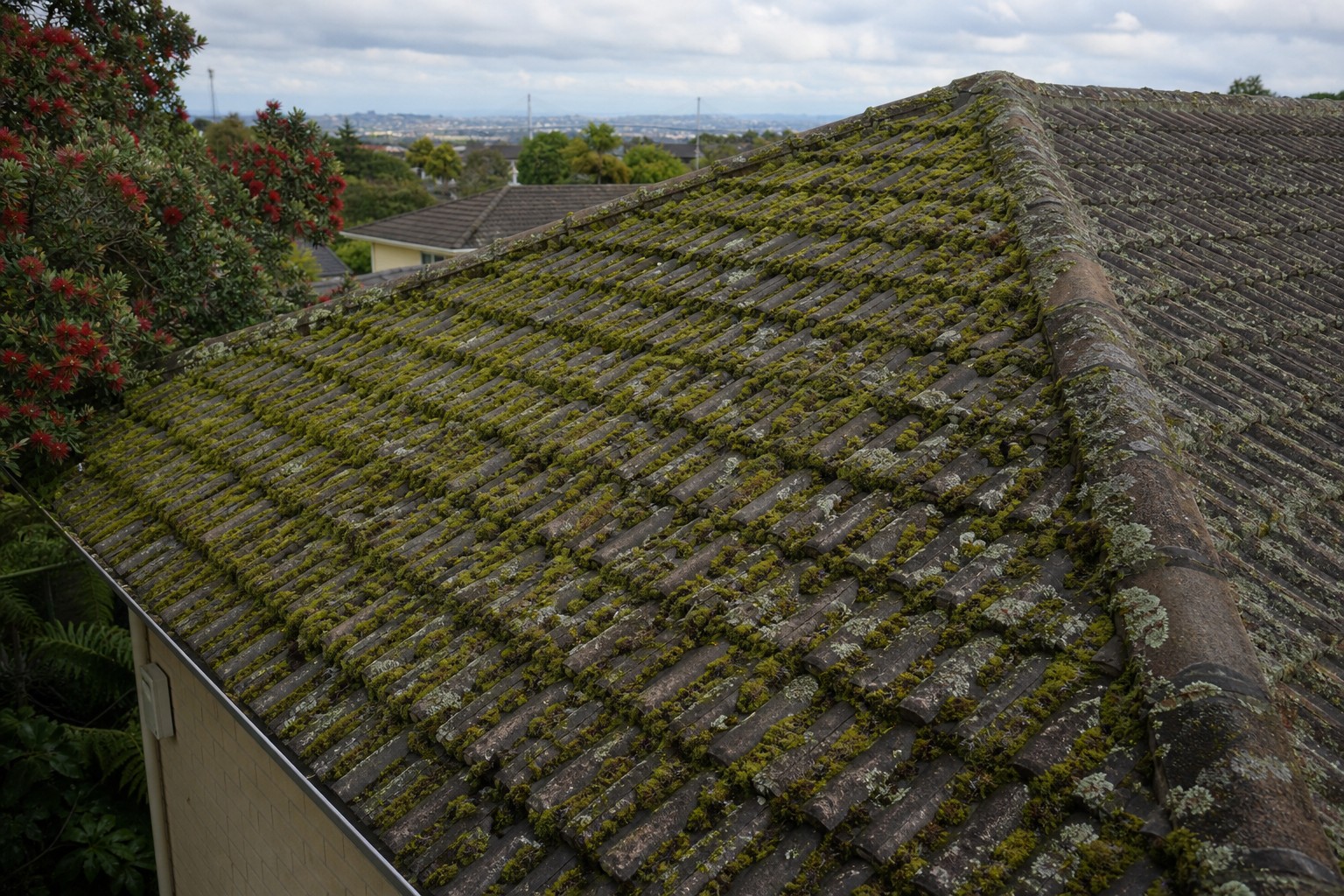
Why Auckland Roofs Get Covered in Moss and Lichen
Auckland’s combination of warm temperatures, frequent rainfall, and high humidity (averaging 75–85%) creates the perfect environment for moss, lichen, and algae to colonise roof surfaces. Concrete tile roofs are the most affected — their porous, textured surface traps moisture and organic debris, giving moss everything it needs to establish and spread.
South-facing roof planes get the worst of it. They receive less direct sunlight, stay damp longer after rain, and can develop thick moss mats within 12 to 18 months. Homes near bush reserves, under overhanging trees, or in suburbs with heavy tree canopy — Titirangi, Green Bay, Te Atatu, Browns Bay — often see moss growth start within months of the last treatment.
The problem goes far beyond cosmetics. Moss holds moisture against the tile surface like a sponge, accelerating the breakdown of the concrete and creating conditions for water to seep beneath tiles. Lichen bonds chemically to the surface and can’t be removed with water alone. Left untreated for years, both organisms cause permanent tile degradation, blocked water channels between tiles, and in severe cases, roof leaks.
Essential Water Blasting treats moss and lichen on roofs across every Auckland suburb — from North Shore concrete tile roofs shaded by pohutukawa trees to South Auckland long-run iron roofs collecting organic debris. Understanding the type of growth on your roof and how to treat it properly is the key to protecting your home’s most important weatherproofing layer.