
🎨 Expert Guide

Can Pressure Washing Damage Your House Paint?

The difference between a clean house and a paint disaster comes down to PSI, technique, and whether your operator knows the difference. Here’s everything Auckland homeowners need to know before booking a wash.

📅 July 2026 ⏱ 10 min read 🏠 Expert Guide
Can pressure washing damage house paint Auckland — soft wash vs high pressure comparison on painted weatherboard

Yes — Pressure Washing Can Destroy Your House Paint

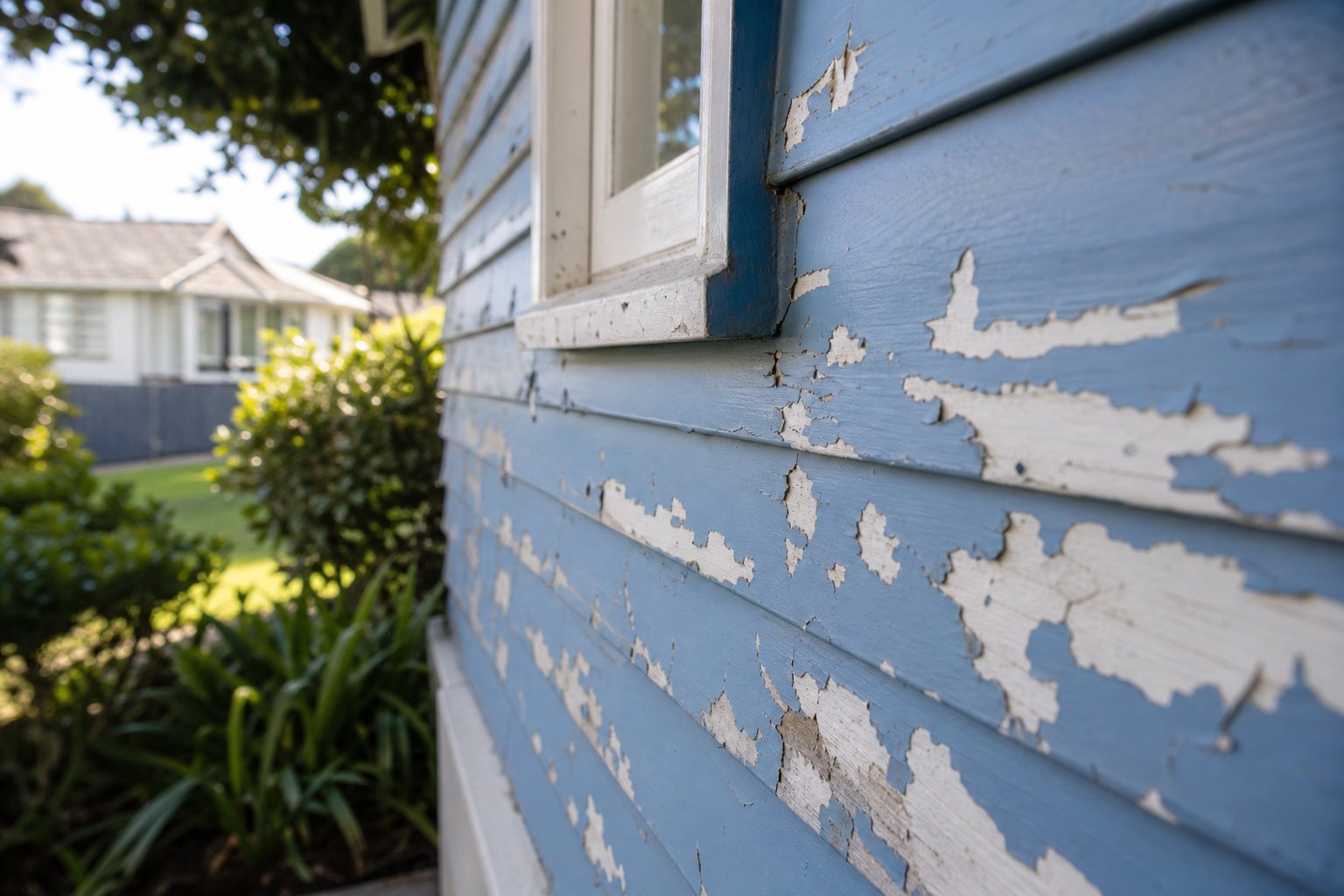
Every week, Essential Water Blasting sees the aftermath of bad pressure washing across Auckland. Peeling paint, water-logged timber, stripped coatings on weatherboard homes that were perfectly fine before someone pointed a 3,000 PSI nozzle at them.

The problem isn’t pressure washing itself — it’s using the wrong pressure on the wrong surface. Most Auckland houses are painted weatherboard, Linea, or plaster. These materials need low-pressure soft washing, not industrial-strength water blasting.

A standard domestic pressure washer runs at 1,500 to 2,500 PSI. That’s enough force to strip paint from timber, force water behind lap joints, and gouge soft grain on older weatherboard. The damage often doesn’t show immediately — it appears days or weeks later as bubbling, peeling, and flaking.

The cost difference is stark. Repainting an Auckland weatherboard home costs $8,000 to $20,000+ depending on size. A professional soft wash costs $199 to $449+gst. Using the wrong method to save a few hundred dollars can cost you thousands in paint repairs — and Essential Water Blasting has cleaned over 1,000 Auckland homes without a single paint damage claim.

🔍 Spot the Damage

6 Signs Pressure Washing Has Damaged Your Paint

If you’ve had your house pressure washed (or done it yourself) and notice any of these signs within days to weeks afterwards, the paint has been compromised.

🫧

1. Bubbling or Blistering

Water has been forced behind the paint film. It lifts from the surface and forms bubbles — especially on south-facing and shaded walls where it dries slowest. Once blistered, the paint cannot re-bond to the substrate. The affected area must be scraped, primed, and repainted.

📄

2. Peeling and Flaking

High-pressure jets strip the bond between paint and substrate. Paint peels in sheets or curls away from the surface. Commonly seen around window frames, corners, and lap joints where pressure concentrates. Once peeling starts, it spreads rapidly — moisture enters the exposed areas and undermines surrounding paint.

🧊

3. Chalking Surface

Run your hand across the paint. If white powder rubs off, the top coat has been eroded by excessive pressure. The UV-protective layer is gone, and the remaining paint will deteriorate rapidly in Auckland’s sun. Chalking is a warning sign — the paint is now unprotected and will fail years ahead of schedule.

🌊

4. Water Staining Inside

Water marks on interior walls or ceilings after a house wash mean water was forced behind the cladding. This is caused by pressure too high for weatherboard lap joints — the water has no path out and soaks the framing. This creates conditions for timber rot and can require wall lining removal to dry properly.

🪵

5. Exposed or Gouged Timber

Bare timber visible after washing means paint has been completely stripped. On older pine weatherboard common across Auckland’s villas and bungalows, high pressure also gouges the soft grain, creating grooves that hold moisture and accelerate rot. This damage is permanent — gouged timber needs filling before it can be repainted.

🎨

6. Colour Fading or Streaking

Uneven colour after washing — lighter patches, vertical streaks, or washed-out areas — indicates the pressure has removed the top coat unevenly. This is most visible on darker-coloured paint. The damage is irreversible without repainting the affected area, and partial repaints often look worse than the original streaking.

⚠️ Why It Happens

Why Pressure Washing Damages Auckland House Paint

Paint damage from pressure washing almost always comes down to one of these five factors. Understanding them helps you avoid the mistake — or recognise when an operator is about to make it.

⚠️ The #1 Cause: Too Much Pressure

Most painted surfaces should be washed below 500 PSI. Domestic pressure washers start at 1,500 PSI — three times the safe limit for painted weatherboard. Without a pressure regulator or the right nozzle, even a careful operator will strip paint. This is why “just renting a Kärcher” is the most common cause of paint damage across Auckland.

Wrong Nozzle Angle

A zero-degree (red) nozzle concentrates all the force into a pinpoint stream. On painted timber, it cuts through paint like a knife. Professional soft washing uses wide fan nozzles at 40 to 65 degrees, spreading the water across a broad area and dramatically reducing impact force on the paint film.

Too Close to the Surface

Holding the wand 15 cm from the wall instead of 30 to 60 cm more than doubles the effective pressure on the surface. Auckland DIY washers almost always stand too close because they think more force equals cleaner results. In reality, the cleaning solution does the work — not the water pressure.

Paint Already Failing

If paint is older than 8 to 10 years, chalking, or showing micro-cracks, it’s already weakened. Any pressure above garden hose level will accelerate the failure. A professional will identify this before washing and adjust the method — or advise that the house needs repainting first, not washing.

🔍 Compare Methods

Pressure Washing vs Soft Washing — Which Is Safe for Paint?

This is where most Auckland homeowners and some operators get it wrong. High-pressure water blasting and soft washing are two completely different methods — and only one is safe for painted surfaces.

Factor Pressure Washing (1,500–4,000 PSI) Soft Washing (<500 PSI)
Water pressure 1,500 to 4,000+ PSI Below 500 PSI (garden hose level)
How it cleans Mechanical force blasts dirt off the surface Treatment solution kills growth at the root
Paint damage risk High — strips, lifts, and erodes paint None — safe for all painted surfaces
Water behind cladding High risk — forced into lap joints Minimal risk — low-pressure rinse
Results duration 6 to 12 weeks (growth returns faster) 12 to 18 months (root system killed)
Safe for painted surfaces? ❌ No ✅ Yes — all paint types

💡 “Water Blasting” in Auckland Often Means High Pressure

Many Auckland operators advertise “house washing” but arrive with a standard pressure washer running at 2,000+ PSI. Always ask what PSI they use on painted surfaces. If they can’t answer or say “it depends,” they’re likely using too much pressure. Essential Water Blasting uses dedicated soft wash equipment — never more than 500 PSI on any painted surface.

🧴 Our Process

How Essential Water Blasting Cleans Without Damaging Paint

Every house wash follows the same process — designed to kill biological growth at the root while putting zero mechanical stress on your paint.

Surface Inspection

Walk the entire property. Check paint condition, cladding type, areas of heavy growth, and any existing damage. If paint is already failing, we tell you before we start — not after. This prevents washing a surface that can’t handle any cleaning method.

Pre-Wet & Protection

Saturate gardens, cover sensitive plants, and pre-wet the walls. Wet cladding absorbs less treatment solution and rinses cleaner. We pre-wet and post-rinse all vegetation on every job — it’s standard, not an optional extra.

Soft Wash Treatment

Apply biodegradable treatment solution at low pressure. The solution breaks down mould, algae, lichen, and dirt at the root. No scrubbing. No force. Dwell time does the work — not PSI. The solution is safe for all paint types including Resene, Dulux, and factory-applied coatings.

Rinse & Inspection

Rinse top-down at below 500 PSI using a wide fan nozzle. This removes the treatment solution, dead growth, and surface dirt without touching the paint film underneath. Final walk-around to check every surface — soffits, gutters, downpipes, and window frames.

💡 Why This Protects Your Paint

At below 500 PSI, the water pressure is roughly equivalent to a garden hose with a nozzle. It’s the cleaning solution that does the heavy lifting — dissolving organic growth at the cellular level. This means no mechanical force on the paint film, no water forced behind cladding, and no risk of stripping, chipping, or eroding the coating. The result lasts 12 to 18 months because the root system is dead — not just blasted off the surface.

🏡 Know Your Paint

Common Exterior Paint Types on Auckland Homes

The type of paint on your house determines how vulnerable it is to pressure washing damage — and how it should be cleaned.

🪣

Acrylic Latex (Most Common)

Brands like Resene Sonyx 101 and Dulux Weathershield dominate Auckland exteriors. Flexible, UV-resistant, and breathable. Lasts 10 to 15 years when well maintained. Safe for soft washing. High pressure strips the top coat and exposes the primer — leading to rapid UV degradation.

🛢️

Oil-Based / Alkyd

Found on older Auckland homes (pre-2000) and some timber joinery. Harder film but becomes brittle with age. Extremely susceptible to flaking under pressure — the rigid coating cracks and lifts in sheets. Requires the lowest possible pressure and careful nozzle angle.

🏭

Factory-Applied (Linea / Palliside)

Pre-primed fibre-cement and PVC cladding has a thin factory coating designed for overcoating. High-pressure washing chips edges, breaks the factory seal, and can void the manufacturer’s warranty (25 years on James Hardie). Always soft wash — never blast.

🏗️

Textured / Plaster Coatings

Plastered and rendered Auckland homes have a textured finish that traps more dirt and biological growth. High pressure erodes the texture, exposing the mesh underneath. These surfaces need a longer dwell time with cleaning solution but very low rinse pressure.

🌿

Stained Timber (Cedar / Kwila)

Stains penetrate the timber rather than sitting on top like paint. Pressure washing strips the stain unevenly, creating a blotchy appearance that requires a full re-stain to fix. Soft washing preserves the existing finish and removes biological growth without disturbing the stain.

💡

When Paint Is Beyond Washing

If your paint is chalking heavily, flaking in multiple areas, or older than 12 to 15 years, washing — even soft washing — won’t fix the underlying failure. In these cases, a professional will recommend repainting first, then switching to annual soft washing to protect your investment long-term.

💰 Pricing

How Much Does Safe House Washing Cost in Auckland?

Professional soft washing is priced by the square metre. Essential Water Blasting uses fixed-rate pricing — you know exactly what you’re paying before the job starts. No hidden extras, no surprises. All prices are +GST.

Single Level Homes

Home Size (SQM) House Wash Gutter Clean Roof Treatment Spider Treatment
Up to 80 sqm $199+gst $99+gst $149+gst $80+gst
Up to 150 sqm $299+gst $149+gst $199+gst $90+gst
Up to 250 sqm $349+gst $179+gst $249+gst $100+gst
Up to 350 sqm $399+gst $199+gst $299+gst $120+gst
351+ sqm Contact us for a custom quote

Double Level Homes

Home Size (SQM) House Wash Gutter Clean Roof Treatment Spider Treatment
Up to 120 sqm $349+gst $149+gst $249+gst $130+gst
Up to 200 sqm $399+gst $199+gst $299+gst $140+gst
Up to 300 sqm $429+gst $229+gst $299+gst $150+gst
Up to 400 sqm $449+gst $249+gst $299+gst $160+gst
401+ sqm Contact us for a custom quote

💡 Compare the Cost

A full exterior repaint costs $8,000 to $20,000+ for an average Auckland home. Regular soft washing prevents the paint degradation that makes repainting necessary — making it one of the smartest maintenance investments you can make. View full pricing →

View all pricing → or call 027 722 4550 for a free quote.

Google Reviews
5.0
★★★★★

Based on 46 verified Google reviews from Auckland homeowners.

⭐ Trusted by Auckland Homeowners

46+ Five-Star Reviews — Zero Paint Damage Claims

Essential Water Blasting maintains a perfect 5.0 Google rating across 46 reviews. Auckland homeowners consistently praise the care taken with their painted surfaces — using dedicated soft wash equipment that protects paint while delivering results that last 12 to 18 months. Every review has been personally responded to.

❓ Common Questions

Frequently Asked Questions

Can pressure washing remove paint from my house?

Yes. Pressure above 1,000 PSI can strip paint from weatherboard, timber, and fibre-cement cladding. The risk increases with older paint, narrower nozzle angles, and closer distance to the surface. Soft washing at below 500 PSI is the safe alternative for all painted surfaces.

What PSI is safe for painted weatherboard?

Below 500 PSI with a wide fan nozzle (40 to 65 degrees) is safe for painted weatherboard. This is essentially garden hose pressure applied through professional equipment. Anything above 1,000 PSI risks stripping paint, especially on older homes or south-facing walls where paint has weathered.

How do I know if my paint can handle washing?

Run your hand across the paint. If white powder (chalking) rubs off, the paint is failing and any washing should be approached cautiously. If the paint is firm, no flaking, and less than 10 years old, soft washing is safe. A professional will inspect before starting and advise you.

Does soft washing damage paint?

No. Soft washing uses below 500 PSI — less pressure than a garden hose. The cleaning solution does the work, not mechanical force. It’s the method recommended by paint manufacturers for maintaining painted exteriors between repaints.

How often should I wash my painted house?

Most Auckland homes benefit from an annual soft wash. Coastal homes, bush-adjacent properties, and heavily shaded south-facing elevations may need washing every 6 to 8 months. Regular soft washing prevents permanent staining and extends paint life by removing biological growth before it damages the surface.

Should I wash my house before repainting?

Yes — but use soft washing, not pressure washing. Soft washing removes mould, algae, and contaminants that prevent paint adhesion without damaging the existing surface. Many Auckland painters require a soft wash before they’ll guarantee their paint work.

Can I pressure wash my house myself?

We don’t recommend it for painted surfaces. Domestic pressure washers typically run at 1,500 to 2,500 PSI — far too high for painted cladding. Without professional equipment that controls pressure below 500 PSI, the risk of paint damage, water ingress, and timber damage is very high.

What’s the difference between water blasting and soft washing?

Water blasting (pressure washing) uses high-pressure water at 1,500 to 4,000 PSI to mechanically force dirt off surfaces. Soft washing uses low-pressure water below 500 PSI with a biodegradable cleaning solution that kills mould and algae at the root. Soft washing is safe for paint; water blasting is not.

🏠 Protect Your Investment

Protect Your Paint — Book a Safe Soft Wash

Essential Water Blasting covers all of Auckland — North Shore, Central, East, South, and West. Professional soft washing with fixed-rate pricing. 1,000+ homes cleaned. 5.0 Google rating. Owner-operated quality on every job.

Complete guide to pressure washing and paint damage on Auckland homes. Expert advice from Essential Water Blasting — Auckland’s owner-operated soft wash specialists with 46 five-star Google reviews. Covering North Shore, Central Auckland, East Auckland, South Auckland, and West Auckland. Professional house washing using low-pressure soft washing below 500 PSI — safe for acrylic latex, oil-based, and factory-applied paint on timber, Linea, cedar, PVC, and fibre-cement cladding. Paint damage signs, safe washing methods, exterior paint types, and fixed-rate pricing by the square metre. Serving Ponsonby, Grey Lynn, Mt Eden, Epsom, Remuera, Devonport, Takapuna, Milford, Albany, Howick, Pakuranga, Manukau, Henderson, and all Auckland suburbs.

← Back to All Articles

QUALITY Pressure Washing Services

Need Washing services?