
πŸ“‹ Expert Guide

House Washing Dos and Don'ts

Common mistakes Auckland homeowners make when washing their homes β€” and what professional soft wash technicians do instead. From an owner-operator with 40+ five-star Google reviews.

πŸ“… July 2026 ⏱ 8 min read 🏠 Expert Tips
Professional house washing in Auckland β€” Essential Water Blasting soft wash technician cleaning a home exterior

Why House Washing Mistakes Are Costly in Auckland

Auckland's warm, humid climate creates the perfect conditions for mould, algae, and lichen to grow on exterior surfaces. Left untreated, biological growth can cause permanent staining on weatherboard, Linea, brick, and plaster cladding β€” and reduce your property value by thousands of dollars.

The problem is that many homeowners (and some so-called "professionals") use the wrong pressure, wrong chemicals, or wrong technique β€” and end up doing more damage than the mould itself. Essential Water Blasting sees the aftermath of DIY pressure washing gone wrong on a regular basis across Auckland: stripped paint, gouged timber, flooded window frames, and scorched gardens.

This guide covers what you should and shouldn't do when washing your Auckland home β€” whether you hire a professional or tackle it yourself. Every tip comes from real-world experience cleaning homes across Auckland's North Shore, Central, East, South, and West suburbs.

βœ“ Best Practice

The 7 House Washing Dos

What professional soft wash technicians in Auckland always do β€” and what you should insist on if you're hiring a company.

βœ“

1. Do Use Soft Wash (Low Pressure Below 500 PSI)

Soft washing uses a combination of biodegradable cleaning solution and low-pressure water β€” typically below 500 PSI β€” to kill mould, algae, and lichen at the root. Essential Water Blasting uses soft wash on every Auckland home because it cleans deeper without damaging surfaces. High-pressure washing only blasts the surface layer off; soft wash kills the organism so it doesn't grow back within weeks.

βœ“

2. Do Protect Your Garden and Plants First

Before any wash starts, soak the surrounding garden beds, shrubs, and lawn with clean water. This dilutes any runoff from the cleaning solution. A professional will also rinse all vegetation after the wash is complete. Essential Water Blasting pre-wets and post-rinses every garden as standard β€” it's part of the job, not an optional extra.

βœ“

3. Do Close All Windows and Doors

It sounds obvious, but water intrusion through open windows is one of the most common house washing complaints. Walk through the entire house before washing begins and check every window, ranch slider, and exterior door. Pay special attention to bathroom louvres and older aluminium joinery β€” these are the biggest culprits for letting water in.

βœ“

4. Do Wash From the Top Down

Always start at the roof or eaves and work downward. This prevents dirty runoff from streaking across clean surfaces below. It also ensures the cleaning solution flows naturally with gravity, giving it maximum contact time on the surface. Washing bottom-up is one of the most common DIY mistakes β€” you end up doing twice the work.

βœ“

5. Do Let the Cleaning Solution Dwell

Soft wash works because the cleaning solution sits on the surface and breaks down the biological growth. This "dwell time" is typically 10 to 15 minutes depending on the severity of the mould. Rushing straight to the rinse stage means the solution hasn't had time to kill the mould roots β€” and the growth will return within weeks instead of months.

βœ“

6. Do Check Your Cladding Type First

Different cladding types need different approaches. Weatherboard, Linea, and painted plaster are common across Auckland homes β€” each responds differently to pressure and chemicals. A professional will identify your cladding type before starting and adjust their method accordingly. What works safely on brick can damage painted weatherboard if the wrong pressure is used.

βœ“

7. Do Wash Your Home at Least Once a Year

Auckland's humidity means mould can establish itself within 6 to 12 months, especially on south-facing walls and areas shaded by trees. Essential Water Blasting recommends an annual house wash for most Auckland properties β€” or every 6 months for homes near the coast or surrounded by heavy vegetation. Regular washing prevents the build-up that causes permanent staining.

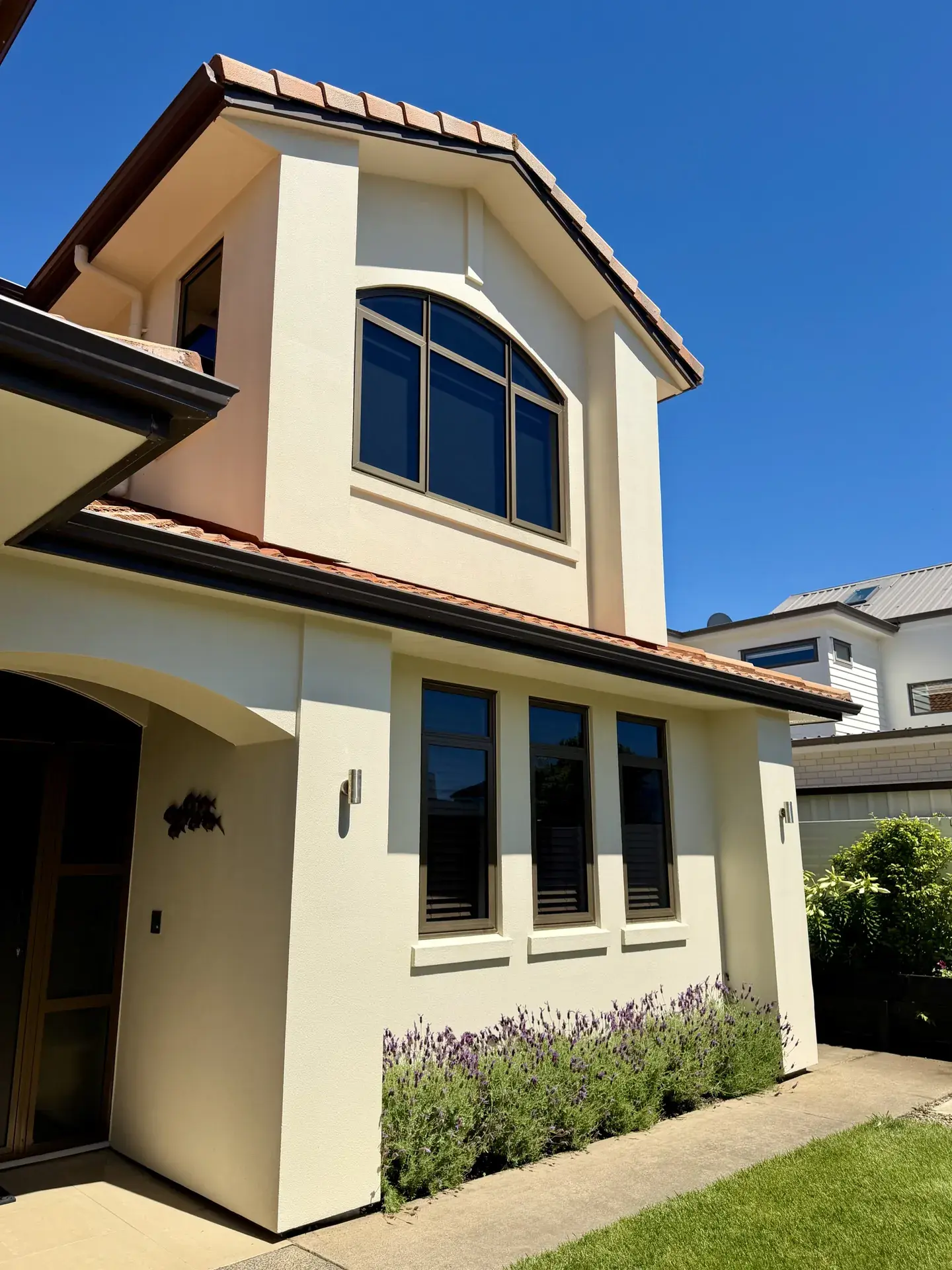
Clean white Auckland villa after professional soft wash by Essential Water Blasting

Result: A freshly soft-washed Auckland villa β€” no paint damage, no garden harm, no streaks.

βœ— Common Mistakes

The 7 House Washing Don'ts

These are the mistakes we see most often across Auckland β€” from DIY attempts and from operators who cut corners.

βœ—

1. Don't Use a High-Pressure Washer on Cladding

This is the number one mistake. A standard KΓ€rcher or petrol pressure washer runs at 2,000 to 3,000+ PSI β€” more than enough to strip paint, gouge timber weatherboard, blast out window sealant, and force water behind cladding into the wall cavity. Once water gets behind cladding, you're looking at potential rot, mould inside walls, and expensive repairs. Soft washing at below 500 PSI is the safe alternative.

βœ—

2. Don't Use Bleach Straight From the Bottle

Undiluted household bleach (sodium hypochlorite at 3–5%) is too strong for most exterior surfaces. It can discolour paint, damage timber, and kill garden plants on contact. Professional soft wash solutions use carefully diluted and buffered cleaning agents designed for exterior use β€” they're effective against mould and algae without the collateral damage of raw bleach.

βœ—

3. Don't Spray Directly at Gaps, Joins, or Electrical Fittings

Aim water away from window frames, door joins, meter boxes, light fittings, and extraction fans. Even low-pressure water can penetrate these gaps if sprayed directly. A professional works at an angle, directing the spray away from vulnerable points. This is one of the biggest differences between a trained operator and a DIY attempt.

βœ—

4. Don't Wash in Direct Sunlight on a Hot Day

When it's hot and sunny, the cleaning solution evaporates too quickly and doesn't get enough dwell time to work. Worse, it can leave chemical streaks and residue marks on the surface that are difficult to remove later. The best conditions for house washing in Auckland are overcast days or early mornings β€” still dry, but without direct UV baking the solution off before it works.

βœ—

5. Don't Ignore Mould Thinking It Will Go Away

Mould and algae on exterior walls don't disappear on their own β€” they get worse. Auckland's humidity and rainfall feed biological growth constantly. A small patch of green algae in winter can become a thick black mould coating by summer. The longer you leave it, the deeper it penetrates into the surface, and the harder (and more expensive) it becomes to remove without causing damage.

βœ—

6. Don't Forget the Gutters, Soffits, and Downpipes

A house wash that skips the gutters and soffits leaves the dirtiest, most visible areas untouched. Bird droppings, cobwebs, and mould accumulate heavily in these areas β€” and they're the first thing people notice from the street. Essential Water Blasting includes gutters, soffits, and downpipe exteriors in every standard house wash because a half-clean house looks worse than an unwashed one.

βœ—

7. Don't Hire Someone Without Asking About Their Method

Not all house washing companies in Auckland use the same approach. Some still use high-pressure water with no treatment solution β€” which cleans the surface temporarily but doesn't kill the mould. Others use harsh, non-biodegradable chemicals. Always ask: What PSI do you use? What's in your solution? Do you pre-wet gardens? Do you include gutters and soffits? If they can't answer clearly, keep looking. Read our guide on how to choose the best house washing company in Auckland.

πŸ”¬ Expert Knowledge

Can House Washing Remove Mould and Mildew?

Yes β€” soft washing is the most effective method for removing mould, mildew, algae, and lichen from Auckland homes. The biodegradable cleaning solution breaks down the cellular structure of the organism, killing it at the root rather than just blasting the surface layer off with pressure.

High-pressure washing removes visible mould temporarily, but the roots (hyphae) remain embedded in the surface. This is why pressure-washed houses often see mould return within 4 to 6 weeks. A properly soft-washed house typically stays clean for 12 to 18 months in Auckland's climate β€” longer if the property has good airflow and isn't heavily shaded.

Will House Washing Damage My Paint or Surfaces?

Not if it's done correctly. Soft washing at below 500 PSI is safe for all common Auckland cladding types including painted weatherboard, Linea, brick, plaster, and concrete. The pressure used is roughly equivalent to a garden hose with a nozzle β€” enough to rinse, not enough to damage.

Damage happens when operators use high-pressure equipment (2,000+ PSI) without adjusting for the surface type. At that pressure, water can strip paint off weatherboard in a single pass, gouge softwood timber, crack plaster render, and force water behind cladding into wall cavities. Essential Water Blasting uses soft wash exclusively β€” keeping pressure low and letting the cleaning solution do the work instead.

What About My Garden Plants?

Professional soft wash solutions are biodegradable and break down quickly in soil. The key is pre-wetting the garden beds with clean water before starting (which dilutes any runoff) and rinsing all vegetation thoroughly after the wash is complete. Essential Water Blasting follows this process on every job β€” we've never had a claim for plant damage across hundreds of Auckland residential washes.

Auckland home with clean soffits and gutters after soft wash treatment

Clean soffits, gutters, and cladding β€” the result of professional soft washing done right.

πŸ“Š Comparison

Soft Wash vs High-Pressure Wash: Quick Comparison

Essential Water Blasting uses soft wash exclusively on Auckland homes. Here's why it matters.

Factor Soft Wash (Below 500 PSI) High-Pressure Wash (2,000+ PSI)
Mould removal Kills mould at the root β€” stays clean 12–18 months Removes surface layer only β€” regrowth in 4–6 weeks
Paint safety Safe on all painted surfaces Can strip paint in a single pass
Weatherboard safety Safe β€” no gouging or splintering Risk of gouging, splintering, water ingress
Window & joinery risk Low risk β€” gentle rinse pressure High risk β€” can blow out seals and force water inside
Garden impact Biodegradable solution, pre-wet + post-rinse No chemicals but physical damage from spray force
How long it lasts 12–18 months in Auckland's climate 4–6 weeks before mould returns
Best for All residential cladding types Concrete driveways, paths, hard surfaces only

Want to learn more? Read our detailed guide: Pressure Washing vs Soft Washing β€” Which Is Better for Your Auckland Home?

πŸ“… Timing

When Should You Wash Your Auckland Home?

Timing your house wash correctly makes a real difference to the results and how long they last.

🌀

Best Conditions

Overcast, dry days β€” or early morning before the sun hits. The cleaning solution needs dwell time, and overcast conditions prevent premature evaporation. Light wind is fine; heavy rain is not.

πŸ“†

Best Season

Spring (September–November) is the most popular time for house washing in Auckland. Mould from winter gets cleaned off before summer, and the warmer drying conditions help surfaces dry quickly after the wash.

πŸ”

How Often

Essential Water Blasting recommends a professional soft wash every 12 months for most Auckland homes. Coastal properties, heavily shaded homes, or areas with heavy tree cover may benefit from washing every 6 to 8 months.

Google Reviews
5.0
β˜…β˜…β˜…β˜…β˜…

Based on 46 verified Google reviews from Auckland homeowners.

⭐ Trusted by Auckland Homeowners

40+ Five-Star Reviews β€” Zero Complaints

Essential Water Blasting maintains a perfect 5.0 Google rating across 46 reviews. Auckland homeowners consistently praise the attention to detail, soft wash results, and care taken with gardens and property. Every review has been personally responded to.

❓ Common Questions

Frequently Asked Questions

What is the best way to wash the outside of a house?

The best method for washing the exterior of a house in Auckland is soft washing β€” a low-pressure technique (below 500 PSI) combined with a biodegradable cleaning solution that kills mould, algae, and lichen at the root. Essential Water Blasting uses soft wash on every residential job because it's safer for paint, timber, and gardens while delivering results that last 12 to 18 months.

Can I pressure wash my house myself?

You can, but it's risky without the right training. Standard consumer pressure washers run at 2,000+ PSI β€” enough to strip paint, gouge weatherboard, blow out window seals, and force water behind cladding. If you do it yourself, use the lowest pressure setting, a wide fan nozzle, and keep the wand at least 30cm from the surface. For best results and safety, professional soft washing is recommended.

How much does house washing cost in Auckland?

Professional house washing in Auckland typically costs between $250 and $600 for a standard residential home, depending on the size and condition. Essential Water Blasting uses fixed-rate pricing by the square metre, so you know exactly what you're paying before the job starts β€” no surprises. Get a free quote at 027 722 4550.

Will soft washing damage my paint or cladding?

No. Soft washing uses pressure below 500 PSI β€” roughly equivalent to a garden hose with a nozzle. It's safe for all common Auckland cladding types including painted weatherboard, Linea, brick, plaster, and concrete. Damage only occurs when operators use high-pressure equipment (2,000+ PSI) without adjusting for the surface type.

How often should I get my house washed in Auckland?

Essential Water Blasting recommends a professional soft wash at least once a year for most Auckland homes. Properties near the coast, under heavy tree cover, or on south-facing slopes may benefit from washing every 6 to 8 months. Regular washing prevents the deep staining that becomes permanent if left untreated.

Can house washing remove black mould?

Yes. Soft washing is the most effective method for removing black mould from exterior surfaces. The cleaning solution penetrates the mould's root system (hyphae) and kills it completely β€” unlike high-pressure washing, which only removes the visible surface layer. After a professional soft wash, treated surfaces typically stay mould-free for 12 to 18 months in Auckland conditions.

What shouldn't you do when power washing a house?

Don't use pressure above 500 PSI on painted cladding, timber, or Linea. Don't spray directly at window frames, door joins, meter boxes, or light fittings. Don't use undiluted bleach. Don't wash in direct hot sun (the solution evaporates too fast). Don't skip pre-wetting the garden. And don't hire a company without asking what pressure and chemicals they use β€” soft washing is the safest method for Auckland homes.

Do I need to be home during a house wash?

No β€” you don't need to be home. Essential Water Blasting just needs access to an outdoor tap and for all windows and doors to be closed. Many Auckland homeowners leave for work and come home to a freshly washed house. We'll send before and after photos so you can see the results even if you're not there.

🏠 Get It Done Right

Ready for a Professional Soft Wash?

Essential Water Blasting covers all of Auckland β€” North Shore, Central, East, South, and West. Fixed-rate pricing by the square metre. 5.0 Google rating. Owner-operated quality on every job.

House washing dos and don'ts for Auckland homeowners. Expert tips from Essential Water Blasting β€” Auckland's owner-operated soft wash specialists with 46 five-star Google reviews. Covering North Shore, Central Auckland, East Auckland, South Auckland, and West Auckland. Fixed-rate pricing by the square metre. Professional soft wash below 500 PSI β€” safe for weatherboard, Linea, brick, plaster, and painted cladding. Includes gutters, soffits, and downpipe exteriors.

← Back to All Articles

QUALITY Pressure Washing Services

Need Washing services?